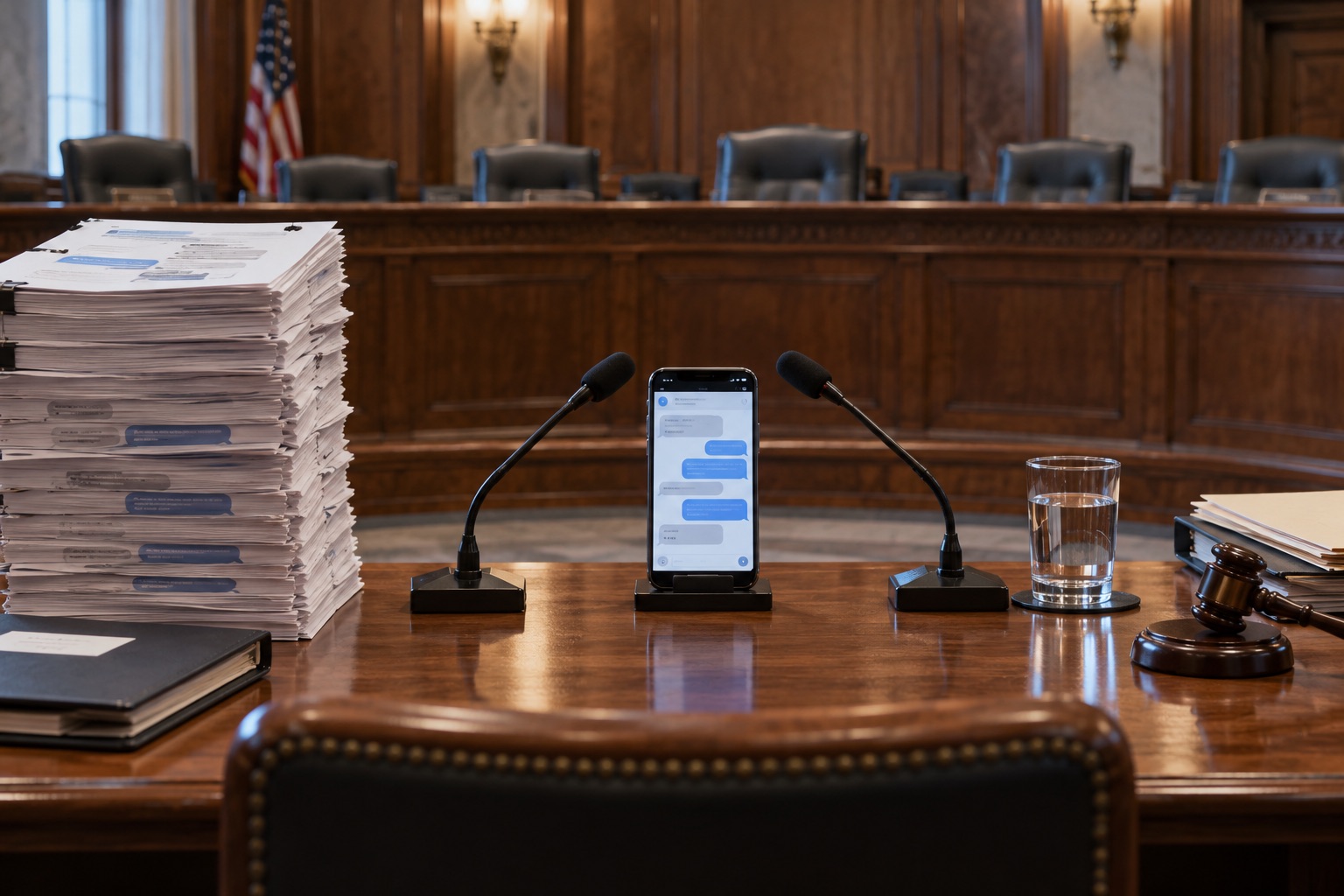
SATIRE — This is an original fictional story. The committee, events, and all quotations are invented; no actual congressional investigation is being reported.
WASHINGTON — In The Daily Holler’s fictional Congress, lawmakers have formed a bipartisan committee to determine who left a group chat after someone posted, “Can we please stay on topic?”
The departure briefly reduced the conversation to 534 participants, triggering fears that somebody, somewhere, had successfully stopped receiving messages from Congress.
“We cannot allow a member to simply walk away from an unproductive discussion,” said an imaginary committee chair. “That sets a dangerous precedent for the institution.”
A crisis with excellent fundraising potential
Within minutes, both parties had issued statements condemning the departure while privately asking staff whether it was possible to leave without everybody getting a notification.
One fictional lawmaker called it an attack on transparency. Another called it government overreach. Neither had read the chat, which contained 86 messages asking what time the meeting started and a photo of a parking space.
The committee’s first hearing opened with six members explaining that the American people deserved answers. Each then used five minutes to answer a question nobody had asked.
An imaginary witness was instructed to respond with a simple yes or no: Did the departing member leave voluntarily, accidentally, or as part of a coordinated campaign to undermine the thumbs-up reaction?
The witness asked whether that was three questions.
The chair accused him of being evasive.
The evidence is largely vibes
Investigators reviewed screenshots, notification settings, and a suspicious “Sounds good” sent by a member who had previously never thought anything sounded good.
An expert explained that the chat’s “seen” indicator meant a message had been displayed, not necessarily understood.
The room fell silent. Several members requested that distinction be entered into the permanent record for unrelated reasons.
The committee also subpoenaed a GIF of a raccoon backing into a hedge, describing it as “potentially relevant to intent.”
One fictional member demanded to know why the raccoon had been allowed to withdraw without consulting leadership.
A staffer explained that it was a looping animation.
The member called for a second hearing.
Nobody is leaving without a statement
The imaginary investigation eventually discovered that the departed participant was a congressional intern whose phone had frozen after receiving 47 consecutive “Thank you” replies to a message asking people not to reply all.
The intern had tried to rejoin, but the invitation link was trapped in a separate group chat created to discuss simplifying communications.
That chat had nine subcommittees.
Rather than close the investigation, lawmakers expanded its scope to determine who had named the original conversation “Quick Question.”
“There is nothing quick about the work we do here,” the fictional chair said, accidentally delivering the most accurate statement of the hearing.
By evening, the committee had approved a resolution affirming that the chat remained a vital forum for productive dialogue.
The resolution was followed by 112 messages saying “Agreed.”
Actual work remained unread.
Original institutional satire from The Daily Holler. This fictional committee is not based on a reported congressional investigation.
Satirical illustration — fictional scene, not a news photograph.